


Updated: 4 days ago
An AI fashion photography studio creates campaign, e-commerce and product images for brands without a physical shoot, starting from the real product and keeping it exactly as it is. What separates a studio from an app is not the software, which everyone can buy, but the eye: art direction, styling, light and the discipline to check every detail before an image leaves the studio.
This guide explains how the work is done, what AI can and cannot replace, and how to choose the right partner.

1. What an AI fashion photography studio does
A studio of this kind does the work of a production company, a photographer and a post-production house in one place. It receives the product, studies the brand, writes the creative direction and builds the images: the model, the location, the light, the styling, the crop. The difference from a traditional shoot is that set, casting and travel are generated rather than booked.
At Vertigini Studio this work is led by a creative director with fifteen years on fashion sets. That experience is the real tool. Knowing how a coat falls, where a highlight should sit on patent leather or how a campaign is sequenced cannot be prompted; it has to be known.

2. AI tools or an AI production studio: the real difference
Self-service platforms are useful for simple packshots and quick variations. They give everyone the same models, the same light and the same look, which is exactly what a luxury brand cannot afford.
A production studio works the other way round. It starts from the brand’s identity and builds a visual language that belongs only to that brand: a recurring digital model, a coherent palette, locations that tell the same story across a season. The images are retouched by hand where needed, checked against the physical product and delivered in the formats the brand uses, from 4K campaign files to marketplace specifications.
3. Product fidelity: the first question every brand asks
The most common concern is simple: will the product still be my product? With jewelry, eyewear, bags and fragrances, a stone that changes cut or a logo that shifts by a millimetre makes an image unusable.
Fidelity is the core of the method. Every image starts from real photographs of the product, taken by the brand or by us, and the product is protected through the whole process. Stitching, hardware, engravings, transparencies and reflections are compared with the original before delivery. When a detail cannot be generated faithfully, it is corrected by hand rather than approximated.
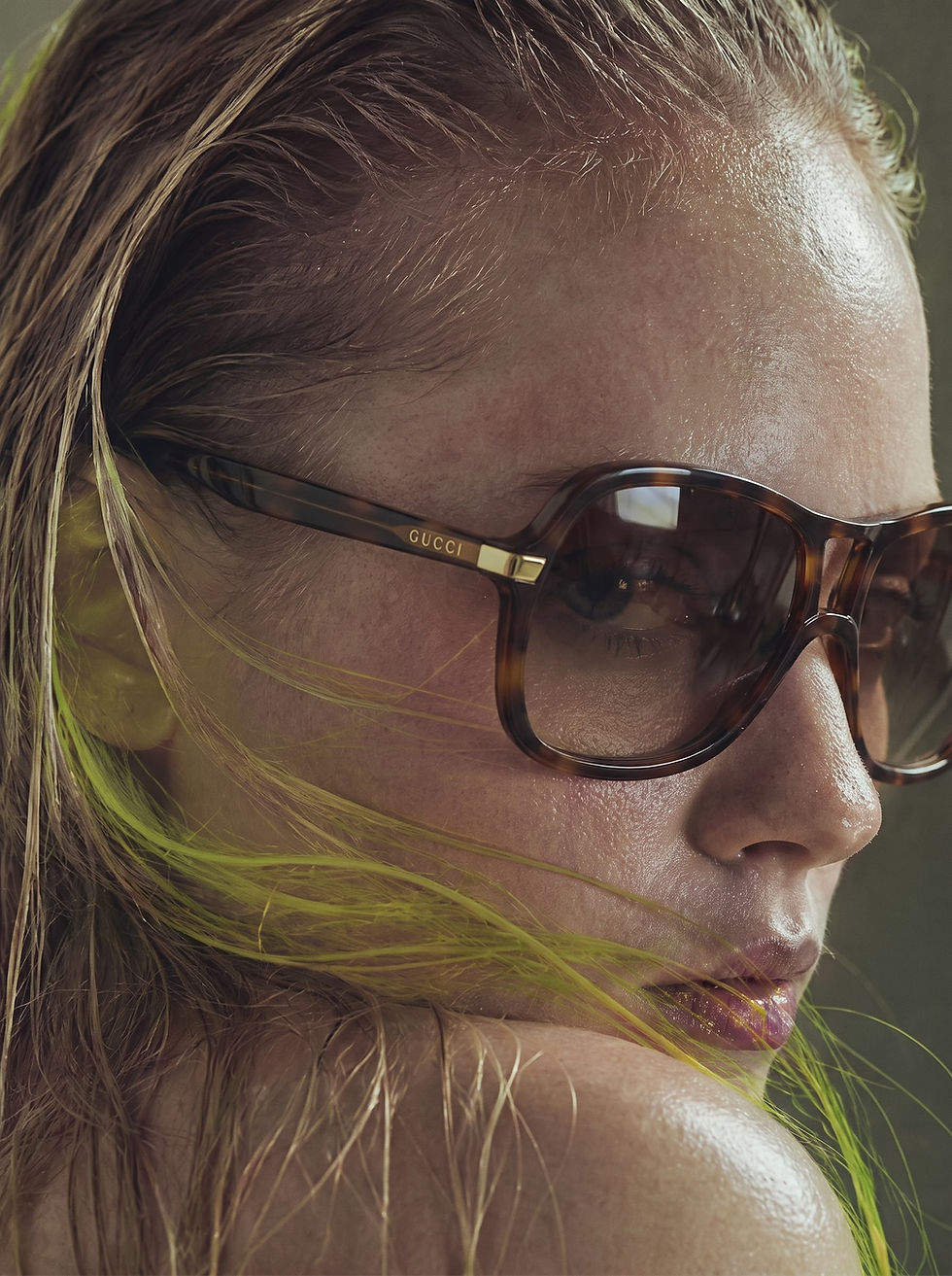
4. What an AI studio can produce for a fashion or luxury brand
Advertising campaigns and seasonal imagery, with the art direction of an editorial shoot.
E-commerce and lookbooks: the whole collection on a consistent model, in every colour, with the same light from the first product to the last.
Digital models: a recurring face for the brand, or a cast chosen to be inclusive, without casting costs. More in our guide to AI virtual models for e-commerce.
AI locations: any setting, from a Milanese palazzo to a salt desert, without travel or permits.
Still life and transparent products: glass, crystal, liquids and fragrance bottles, the hardest objects to light.
Jewelry: lookbooks and campaigns where the piece keeps its exact proportions, stones and finish.
Beauty and skincare: textures, swatches and skin that look real, not plastic.
Video: short films and social content generated from the same visual world as the campaign.

Case study: Guitar
For Guitar, a press office celebrating its 35th anniversary, Vertigini Studio created the imagery for a complete rebrand and an AI video for the anniversary.
The campaign is built on recurring characters, robots and models placed in sets that could not exist on a real shoot: an archery duel, a room of blue chairs, a model floating underwater in a red dress. Every image keeps the same light and palette, so the whole project reads as one visual story. The files were produced at very high resolution, ready for the website, social media and print.

5. How a project works, step by step
Brief and creative direction: the brand shares products, references and goals; the studio proposes moodboard, model and settings.
Product photography: simple, well-lit photos of each item, taken by the brand or arranged by the studio.
Pilot test: a few finished images, usually within one or two working days, to agree on the look before production starts.
Production in batches: the collection is produced in planned lots, so the brand can review and launch progressively.
Revisions: rounds of corrections are part of the process, not an extra.
Delivery: final files in the formats needed for site, social, marketplaces and print, with usage rights defined in advance.
6. What determines the cost of AI fashion photography
The price of an AI project depends on four things: the type of image (a packshot is not a campaign), the number of images, the complexity of the product, and the usage rights, which are agreed separately for advertising.
Volume matters most: a brand that plans a monthly flow of content pays far less per image than one that orders a single set. Compared with a traditional production, the savings come from removing studio hire, travel, casting and the time between shoot and launch, while the creative quality stays at campaign level.

7. When AI is the right choice, and when it is not
AI is the right choice when a brand needs many images, fast, with a consistent look: e-commerce, seasonal updates, social content, product launches, new markets that need a different face or setting. It is also the right choice for products that do not exist yet, such as prototypes and samples.
It is not a substitute for everything. A documentary story about real artisans, or a campaign built on a specific celebrity, still belongs to a real set. The most interesting brands today use both, and a good studio will tell you honestly which one a project needs.
8. How to choose an AI fashion photography studio
Look at the portfolio for consistency, not single beautiful images: can they keep the same model and light across twenty products?
Ask how they protect the product, and ask to see a detail at full resolution.
Ask who directs the images: a creative with fashion experience, or only a technical operator.
Ask for a pilot test on your own product before committing to a collection.
Check formats, revision rounds and usage rights before you start.
Frequently asked questions
Is AI fashion photography good enough for luxury brands?
Yes, when it is art-directed and checked by hand. The technology is ready; the result depends on the eye that guides it.
Will the AI change my product?
It should not. Every image starts from photos of the real product, and details such as stones, logos and stitching are verified against the original before delivery.
How long does an AI photoshoot take?
A pilot test takes one or two working days. A full collection is planned in batches, based on the number of products.
Can I use the images in advertising?
Yes. Usage rights for campaigns and paid media are defined in the agreement before production.
Do you work with brands outside Italy?
Yes. Vertigini Studio is based in Milan and works remotely with brands in Europe, the United States and the Middle East.
Work with Vertigini Studio
Vertigini Studio is an AI creative production studio in Milan for fashion, jewelry, beauty and luxury brands. If you are planning a campaign, a new collection or an e-commerce update, book a call and we will start with a test on your product.


Comments